
The Complete Guide to Fulfillment Services for Growing Brands.
If your brand is growing — or planning to — order fulfillment is one of the highest-leverage decisions you'll make. Done well, it disappears into the background and lets you focus on product, marketing, and customers. Done poorly, it eats your margins, frustrates your buyers, and caps the growth of the business.
This guide is a practical, no-jargon walkthrough of what fulfillment services actually do, when it makes sense to outsource, how pricing works, and what to look for when choosing a partner. Whether you're shipping 50 orders a month from your garage or scaling into national retail distribution, the fundamentals are the same — and the decisions you make now will shape the next five years of your operation.
What this guide covers
What fulfillment services are
In-house vs. outsourced fulfillment
The core services a 3PL provides
Types of fulfillment models
How fulfillment pricing works
Signs you're ready to outsource
KPIs that actually matter
How to choose a fulfillment partner
Frequently asked questions
What Are Fulfillment Services?
Fulfillment services are the end-to-end operations that move a product from the moment it arrives at a warehouse to the moment it lands at a customer's door — or on a retailer's shelf. The work breaks down into five core stages:
Receiving: inbound shipments are unloaded, counted against the purchase order, inspected for damage, and logged into a warehouse management system (WMS).
Warehousing: goods are stored in designated locations — either by SKU, by client, or in a hybrid arrangement — with inventory tracked in real time.
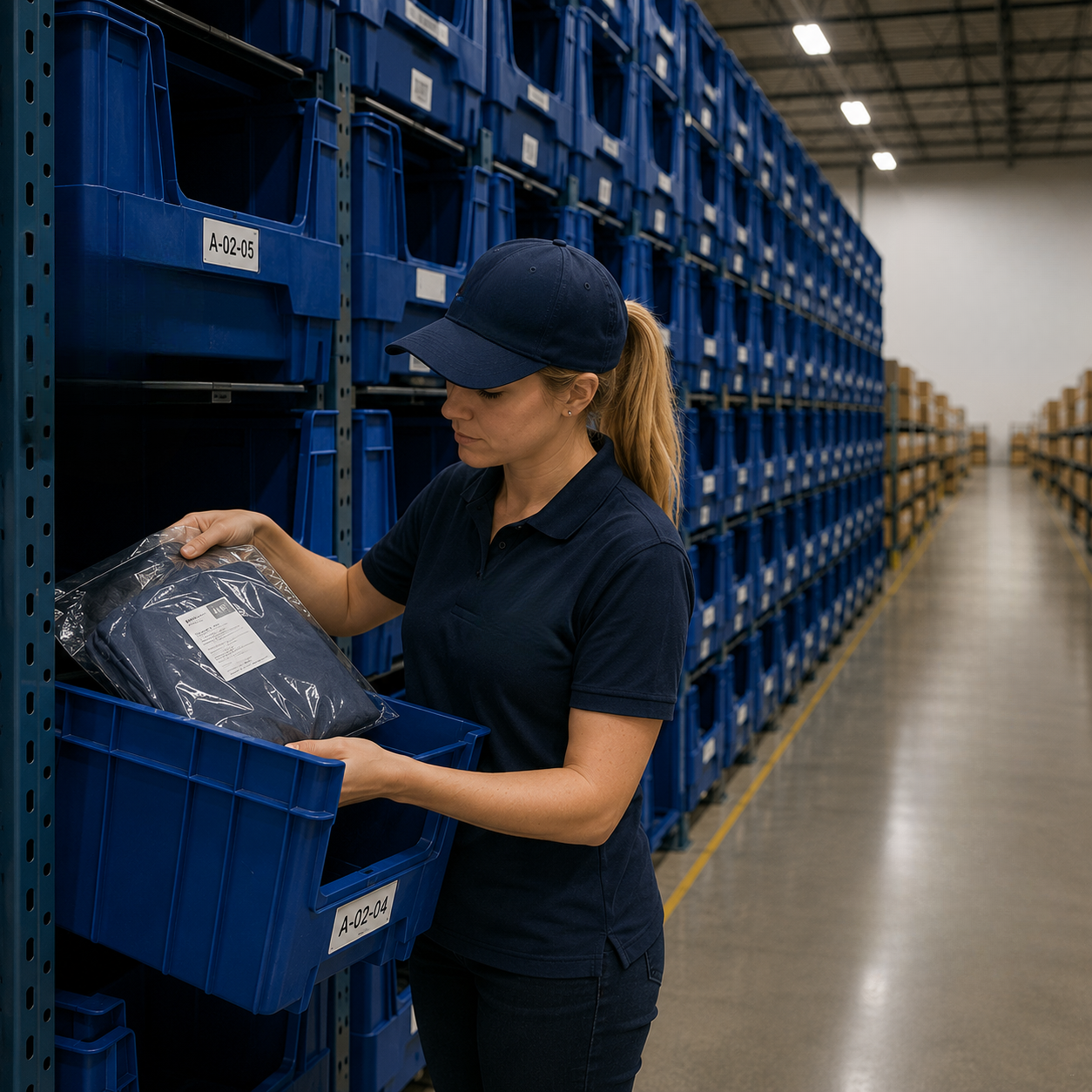
Pick and pack: when an order comes in, items are pulled from their storage locations, packed according to specification, and verified before shipment.
Shipping: the order is handed off to the appropriate carrier, with rate shopping and routing handled automatically in most modern operations.
Returns and reverse logistics: returned items are received, inspected, graded, and either restocked, refurbished, liquidated, or destroyed.
A third-party logistics provider — or 3PL — is a company that performs all of these functions on your behalf. You ship your inventory to their warehouse, they store it, and they fulfill every order that comes through your sales channels.

A 3PL handles warehousing and fulfillment. A 4PL goes further, managing your entire supply chain — including sourcing, freight, and 3PL relationships on your behalf. Most growing brands need a strong 3PL, not a 4PL.
Quick clarification: 3PL vs. 4PL
In-House vs. Outsourced Fulfillment
Every brand starts with in-house fulfillment, even if "in-house" means a spare bedroom and a roll of packing tape. That model works — until it doesn't. The question isn't whether to outsource, but when. Here's how the two approaches compare across the factors that matter most:
| Factors | In-House | Outsourced (3PL) |
|---|---|---|
| Upfront cost | Low to start; rises sharply as you scale | Predictable per-unit pricing, no real estate or equipment investment |
| Control | Total control over every order | Standardized processes with custom SOPs for your account |
| Scalability | Limited by your space, staff, and hours | Scales up and down with order volume |
| Shipping rates | Retail rates unless you negotiate hard | Wholesale carrier rates from aggregated volume |
| Retail compliance | Manual, error-prone, often a learning curve | Built-in EDI, ASN, and labeling expertise |
| Peak season | Hiring, training, burnout, missed orders | Pre-staffed and pre-scaled before peak |
| Geographic reach | One location, longer transit times | Strategic locations closer to customers |
| Your time | Hours per day on operations | Hours per week on oversight |
The honest answer is that in-house fulfillment is the right choice for many brands in their first year. It keeps costs low, gives you total visibility into the customer experience, and forces you to understand your own operation. But there's a tipping point — usually somewhere between 500 and 2,000 orders per month, depending on product complexity — where the math flips and outsourcing becomes the smarter move.
| Service | What It Involves |
|---|---|
| Receiving & Warehousing | Inbound shipments are unloaded, inspected, counted, and logged. Inventory is stored in tracked locations with real-time visibility through a WMS. Includes cycle counts, annual physical inventory, and damage reporting. |
| Pick & Pack | Orders are pulled from storage, verified (ideally with barcode scanning), packed to your specification, and labeled. This is the operational heart of the business and where accuracy lives or dies. |
| Direct-to-Consumer (DTC) Fulfillment | Single-order, often single-item shipments going to individual customers. Optimized for speed, branded packaging, and carrier rate shopping. |
| B2B & Wholesale Fulfillment | Larger orders shipping to retailers, distributors, or business customers. Typically palletized, often with case-pack and inner-pack requirements. |
| Retail Compliance & EDI | The work of meeting major retailer requirements — EDI transactions, advance shipping notices (ASNs), UCC-128 labels, routing guides, and vendor scorecards. Mistakes here cost real money in chargebacks. |
| Kitting & Assembly | Combining multiple SKUs into a single sellable unit — subscription boxes, gift sets, retail displays, promotional bundles. Performed as needed or built in advance. |
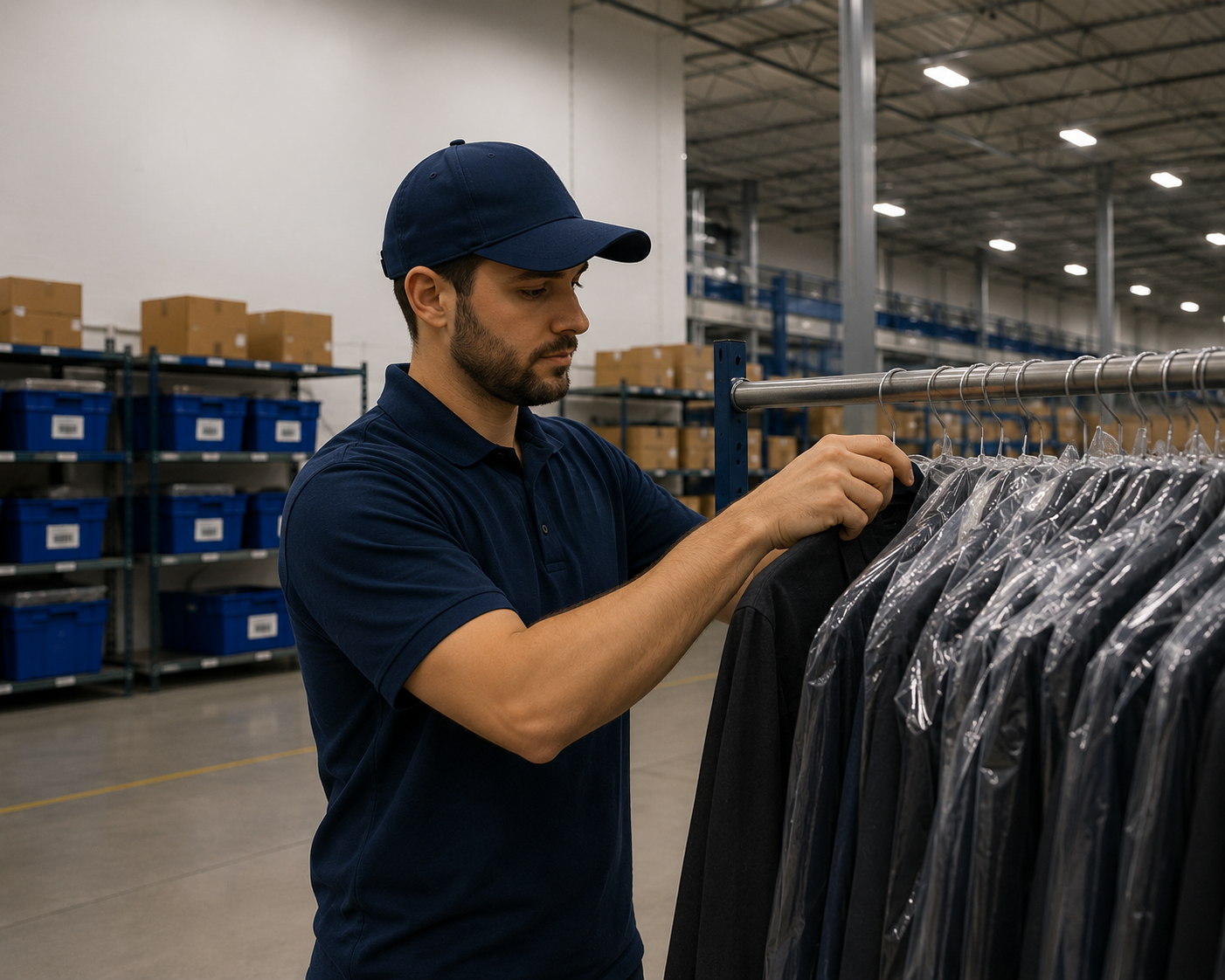
| Value-Added Services (VAS) | Anything that prepares a product for sale: ticketing, polybagging, hangtagging, repackaging, light assembly, quality inspection. |
| Shipping & Carrier Management | Negotiated rates across multiple carriers, with rate-shopping logic that picks the best option per order. Includes label printing, manifest reconciliation, and claims management. |
| Returns Management | Receiving returned merchandise, inspecting and grading it, restocking sellable units, processing refunds or exchanges, and reporting on return reasons. |
| Reporting & Analytics | Real-time inventory visibility, order status, KPI dashboards, and the data you need to make decisions — not just a black box. |
The Core Services a Fulfillment Provider Offers
Not all 3PLs offer the same services, and not every brand needs every service. Here's the standard menu, with what each one actually does:
Learn more about our specific service offerings on the Services page.
Types of Fulfillment Models
If you've decided to outsource, the next question is what kind of fulfillment model fits your business. The three most common are:
1. Single-Channel DTC Fulfillment
You sell through one channel — typically Shopify, WooCommerce, or a similar e-commerce platform — and need orders picked, packed, and shipped to consumers. This is the simplest fulfillment scenario and what most 3PLs are built around.
2. Omnichannel Fulfillment
You sell across multiple channels — your own website, Amazon, wholesale accounts, and possibly major retailers — from a single inventory pool. Orders flow in from different systems, each with different packaging, labeling, and routing requirements. Omnichannel fulfillment requires a 3PL with strong integrations and the ability to apply different rules to different order types.
3. Retail and Wholesale Distribution
You're shipping to retailers — Costco, Target, Walmart, Whole Foods, regional grocery chains, specialty boutiques. This is the most demanding category because every retailer has its own compliance requirements, routing guides, and chargeback structures. The cost of getting it wrong is high, but the volume opportunity is significant.
4. Subscription Box Fulfillment
Recurring monthly or quarterly shipments, usually with custom kitting, branded inserts, and tight ship windows. The fulfillment work is concentrated into a few days each cycle, which puts unusual demands on labor planning and capacity.
Most brands need more than one model
A growing brand often runs DTC on their website, sells on Amazon FBM (fulfilled-by-merchant), ships wholesale orders to boutiques, and occasionally lands a major retail PO. A capable 3PL handles all four from the same inventory pool — that's the entire point of outsourcing to one.
| Charge Type | What You're Paying For |
|---|---|
| Receiving | Per pallet, per carton, or per hour. Charged when your inventory arrives at the warehouse. |
| Storage | Per pallet, per cubic foot, or per bin location, billed monthly. Some providers charge by location regardless of how full it is; others charge by actual cube used. |
| Pick fee | Per item pulled from inventory. Often tiered — first pick costs more, additional picks on the same order cost less. |
| Pack fee | Per order packed. May be bundled with the pick fee or charged separately. |
| Packaging materials | Boxes, dunnage, tape, custom inserts. Usually billed at cost plus a small markup, or included in the pack fee. |
| Shipping | The actual carrier cost, usually passed through at the 3PL's negotiated rates (which should be lower than what you'd pay retail). |
| Value-added services | Anything custom — kitting, labeling, ticketing, quality inspection. Usually billed at an hourly rate or per-unit rate. |
| Account management | Some 3PLs charge a monthly account fee for dedicated support, reporting, and SLA management. Others bundle it into other line items. |
| Returns | Per return processed, with separate fees for inspection, restocking, or disposal. |
How Fulfillment Pricing Works
Fulfillment pricing is notoriously hard to compare apples to apples, because every provider structures their quote a little differently. But almost every 3PL charges for some combination of the following:
When you're comparing quotes, the only number that matters is total cost per order at your actual order profile. Build a model that uses your real average order — number of SKUs, weight, destination mix, packaging — and run each provider's pricing against it. A provider with cheap pick fees and expensive storage can come out worse than the opposite, depending on your inventory turn rate.
Signs You're Ready to Outsource Fulfillment
There's no universal threshold that says "now is the time," but there are reliable signals. If three or more of these are true for your brand, you're almost certainly past the point where outsourcing makes financial and operational sense:
You're spending more than 10 hours a week on packing, shipping, and inventory tasks personally.
You've outgrown your current storage space, or you're paying for warehouse space that sits half-empty.
Your shipping costs are eating into your margins because you're paying retail carrier rates.
You've missed ship-by dates, or your order accuracy has dropped below 99 percent.
A major retailer has asked for EDI, ASNs, or UCC-128 labeling and you don't have the infrastructure.
You're hiring (or planning to hire) seasonal warehouse staff to handle peak.
You want to expand to new sales channels but can't take on the operational complexity.
You're losing sleep over inventory accuracy, returns, or fulfillment errors.
Your team's time is better spent on marketing, product, or sales than on packing boxes.
If you recognized yourself in that list, you're not alone — and you're not too early. Most brands wait too long, not too soon.
| KPI | What It Tells You |
|---|---|
| Order Accuracy | The percentage of orders shipped without errors. Industry-standard target: 99.5 percent or higher. Anything below 99 percent will damage your brand. |
| Inventory Accuracy | How closely your system's inventory count matches the physical count on the shelf. Target: 99 percent or better, verified through regular cycle counts. |
| On-Time Shipping (OTS) | The percentage of orders shipped by the promised cutoff time. Same-day shipping on orders received before a defined cutoff is the modern standard. |
| Order Cycle Time | How long it takes from order placement to shipment. For DTC, this should be under 24 hours. |
| Cost per Order | Your fully-loaded fulfillment cost divided by orders shipped. Trend this monthly — it should drop or stay flat as you scale. |
| Return Rate | Percentage of orders returned. Tracking this by SKU and by return reason will reveal product, sizing, or expectation problems. |
| Chargeback Rate | For retail accounts, the percentage of POs that result in vendor chargebacks. Anything above 1 percent signals a compliance problem worth fixing immediately. |
| Inventory Turn | How many times your average inventory sells through in a year. Higher turn means less capital tied up in storage. |
Fulfillment KPIs That Actually Matter
If you can't measure it, you can't manage it. These are the metrics every brand should be tracking, whether fulfillment happens in-house or with a 3PL partner:
Any 3PL worth working with should report on these metrics monthly and meet them under a contractual service-level agreement (SLA). If a provider can't tell you their current accuracy rate when you ask, that's your answer.
How to Choose the Right Fulfillment Partner
Choosing a 3PL is a five-year decision, not a three-month one. Switching providers is expensive, disruptive, and risky — so the right move is to choose carefully the first time. The factors that matter most:
Location
Where the warehouse sits determines your shipping costs and your transit times. A provider in the middle of the country can reach most of the U.S. in two days; a provider on a coast trades faster service to nearby customers for slower service to the rest of the country. For brands that ship coast-to-coast, multi-location distribution is the better answer than a single central warehouse.
Technology
The 3PL's warehouse management system, order management integrations, and reporting capabilities are not optional extras — they're the product. Ask to see the customer portal, ask how integrations are built and maintained, and ask what real-time visibility you'll have into inventory and orders.
Channel Expertise
A 3PL that's spent ten years shipping subscription boxes is not the same as one that's spent ten years on retail compliance. Ask about their experience with your specific channels — DTC, Amazon, wholesale, retail — and ask for references in those channels.
Accuracy and Verification
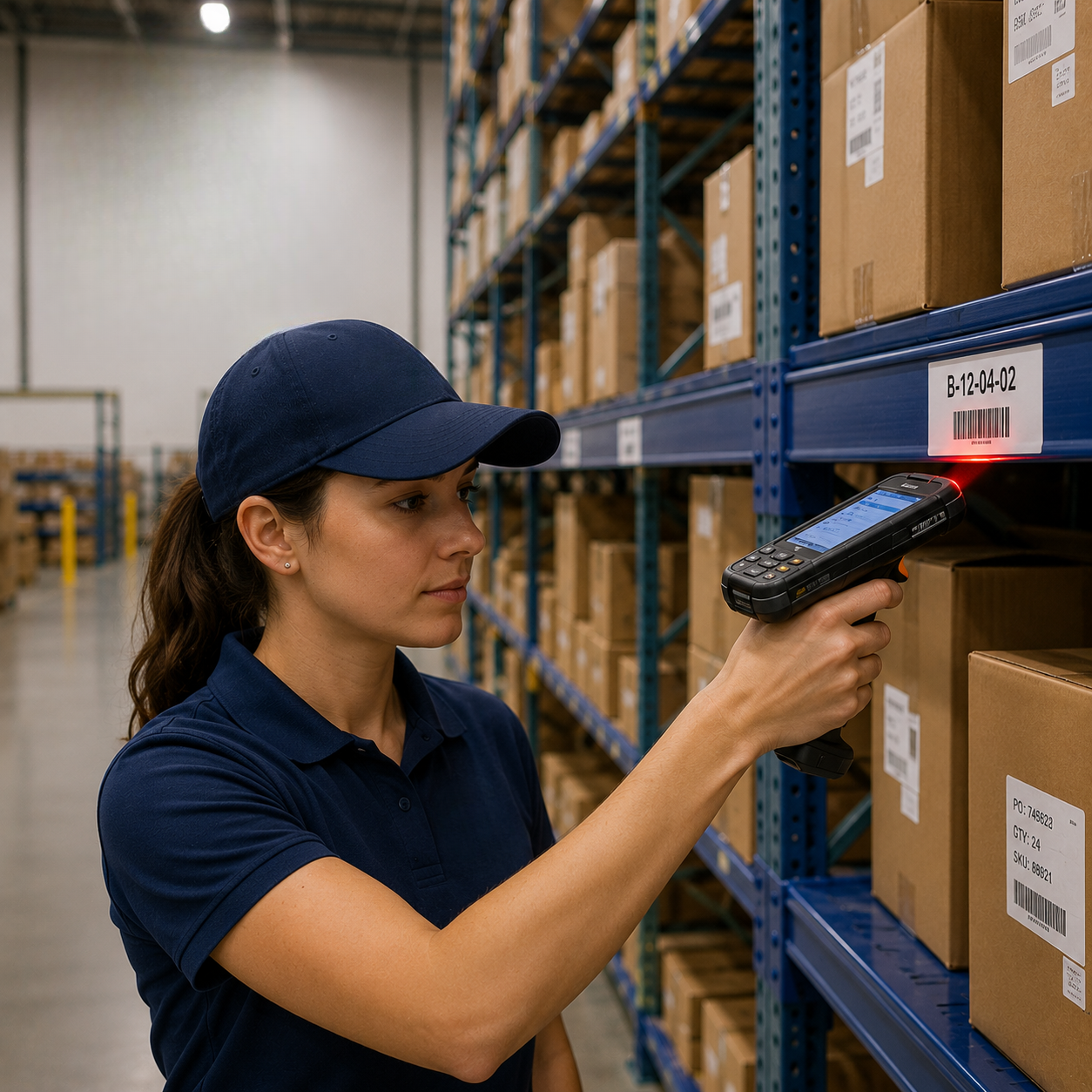
Order accuracy isn't a goal; it's a process. Ask what verification steps exist between pick and pack, whether barcode scanning is used at every step, and how errors are caught before shipment. A provider that hits 99.5 percent accuracy by accident will lose it the moment they get busy.
Scalability
The 3PL that's perfect at your current volume may not be the right partner at 10x your current volume. Ask about their largest current client, their peak-season capacity, and how they've handled rapid client growth in the past.
Transparency and Reporting
You should have visibility into every order, every inventory movement, and every charge on your invoice. Opaque billing, unclear SLA performance, and "trust us" answers are red flags.
Cultural Fit
This sounds soft, but it's not. Your 3PL is going to be on the phone with you weekly — sometimes daily — for years. You want a partner who picks up the phone, communicates clearly, and tells you what you need to hear, not what you want to hear.
Frequently Asked Questions
-
It varies widely based on your product, your order profile, and your provider — but a typical small-parcel DTC order runs anywhere from $3 to $8 in fulfillment fees (pick, pack, and materials), plus actual shipping cost. The best way to know your real cost is to model your specific order mix against a provider's quote.
-
In practice, the terms are used interchangeably. Technically, a fulfillment center is a warehouse focused specifically on order fulfillment, while a 3PL may offer broader logistics services including freight, transportation management, and supply chain consulting. Most providers do both.
-
Onboarding typically takes 30 to 90 days, depending on complexity. Simple DTC accounts can launch in two to four weeks; accounts with multiple retail integrations, EDI requirements, or custom kitting may take longer. The timeline includes system integrations, SOP documentation, inventory transfer, and live testing.
-
Not with a modern 3PL. A capable provider gives you real-time access to inventory levels, order status, shipment tracking, and reporting through a customer portal. If anything, you'll have more visibility than you have today, not less.
-
Yes — and this is one of the biggest reasons to outsource. A single inventory pool serving multiple channels eliminates the cost and complexity of running separate operations. Your 3PL should be able to apply different packaging, labeling, and routing rules based on the order type.
-
Peak season — usually mid-October through January for most consumer brands — is when fulfillment partnerships are tested. A well-prepared 3PL will have staffed up in advance, secured carrier capacity, and discussed your forecast with you weeks before volume hits. If your provider seems unprepared in November, that's a problem.
-
Switching providers is disruptive but not impossible. The transition typically takes 60 to 120 days and is best done in a slow season, not during peak. Before you switch, have a documented reason — what specifically isn't working — and a clear set of requirements for the next provider so you don't repeat the mistake.
-
Most 3PLs use one- to three-year agreements, though month-to-month arrangements exist. Longer commitments typically come with better pricing. Read the contract carefully — particularly the termination clauses, rate-escalation language, and minimum-volume provisions.
-
Industry-standard accuracy is 99.5 percent or higher. Anything below 99 percent is unacceptable for a serious brand. Ask any provider you're evaluating for their current accuracy rate, how it's measured, and what their SLA commitment is.
-
A strong 3PL with retail compliance expertise can absolutely make the difference between landing and keeping a major retail account. EDI capability, ASN accuracy, on-time delivery, and chargeback management are all areas where the right partner adds significant value.
Ready to take the next step?
Enter your email to get our free Guide to Choosing a Fulfillment Company and the companion Fulfillment Company Checklist — the same framework we walk new clients through.